
A proposed map from Gov. Ron DeSantis’ Office would net Republicans four congressional seats — at least based on voter performance in 2024.
But how do things look based on prior election cycles?
There’s no doubt that Florida’s population shifted significantly rightward since the last Democratic wave election. But Democrats still suggest that President Donald Trump’s performance in the last Presidential Election is no indicator of how voters will cast ballots in November.
Florida Politics ran numbers using Dave’s Redistricting to see what would happen if the proposed 2026 map was in effect in prior years. All analysis necessarily is based on statewide elections and does not account for incumbents overperforming the ticket.
2024
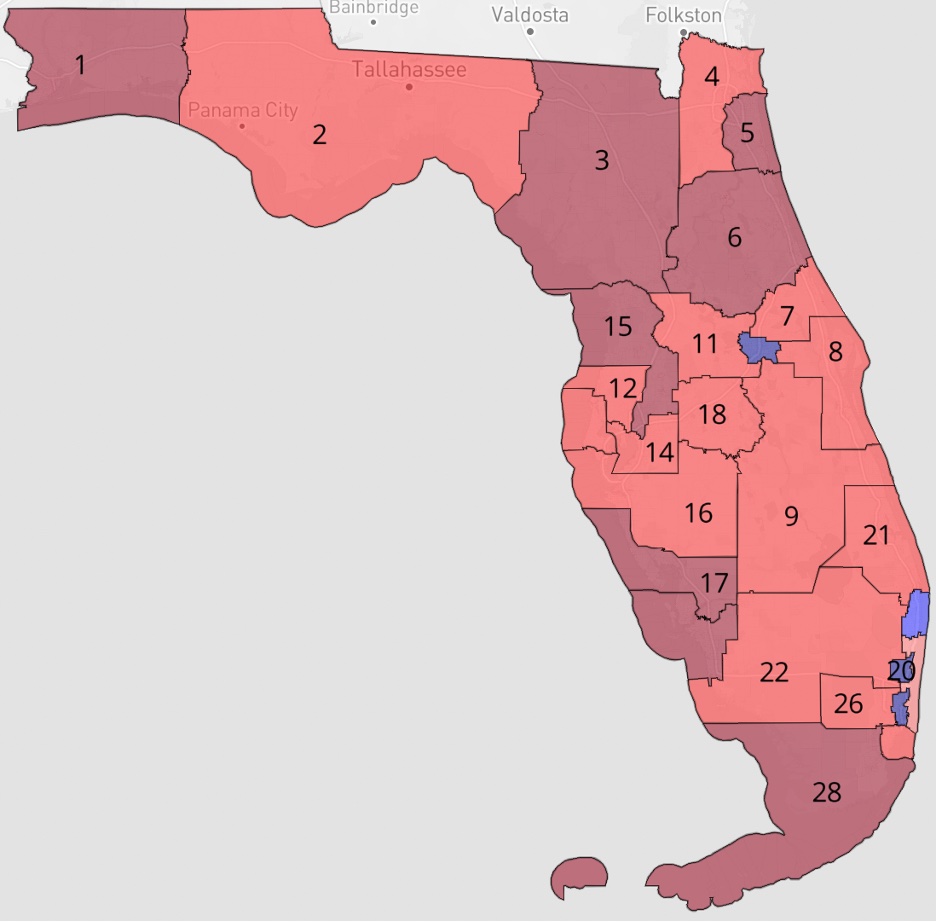
The best indicator of partisan tendency remains how voters performed in the most recent Presidential Election. Based on that, Republicans would net four seats, growing their share of the U.S. House delegation to 24 seats compared to just four for Democrats. The gains come in the loss of Democratic seats in Tampa Bay and Central Florida, as well as the disappearance of two Democratic seats in South Florida. Of note, two of those seats, Florida’s 14th and 22nd Congressional Districts, have a partisan lean that falls within 10 percentage points but still tilts Republican, according to Dave’s Redistricting. Trump won Florida in his last run with 56% of the vote.
2022
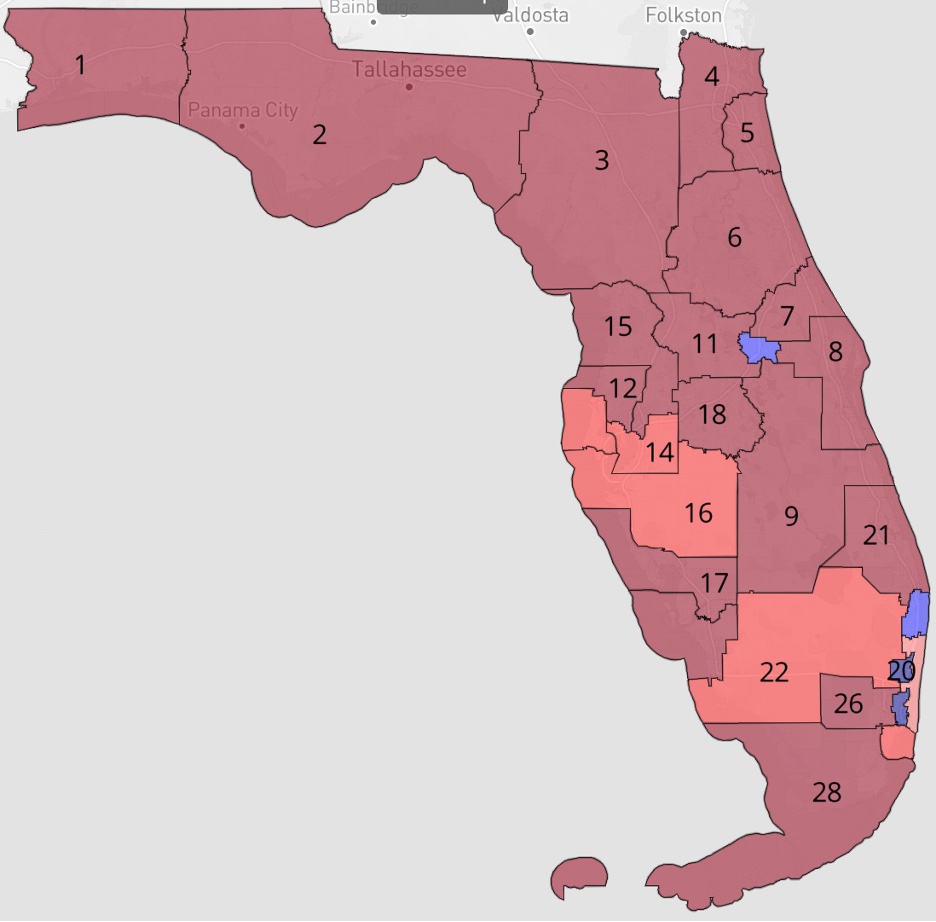
Republicans’ high-water mark in the last decade came in 2022, when Gov. Ron DeSantis won a landslide re-election with 59% of the vote, and then-U.S. Sen. Marco Rubio won 58% in his own re-election race. That was the first year Florida’s current map was in place, and Democrats would win eight House seats. But under the new map, Democrats would only win in four jurisdictions and Republicans would take between 57.5% and 72.9% of the vote in all remaining districts.
2020
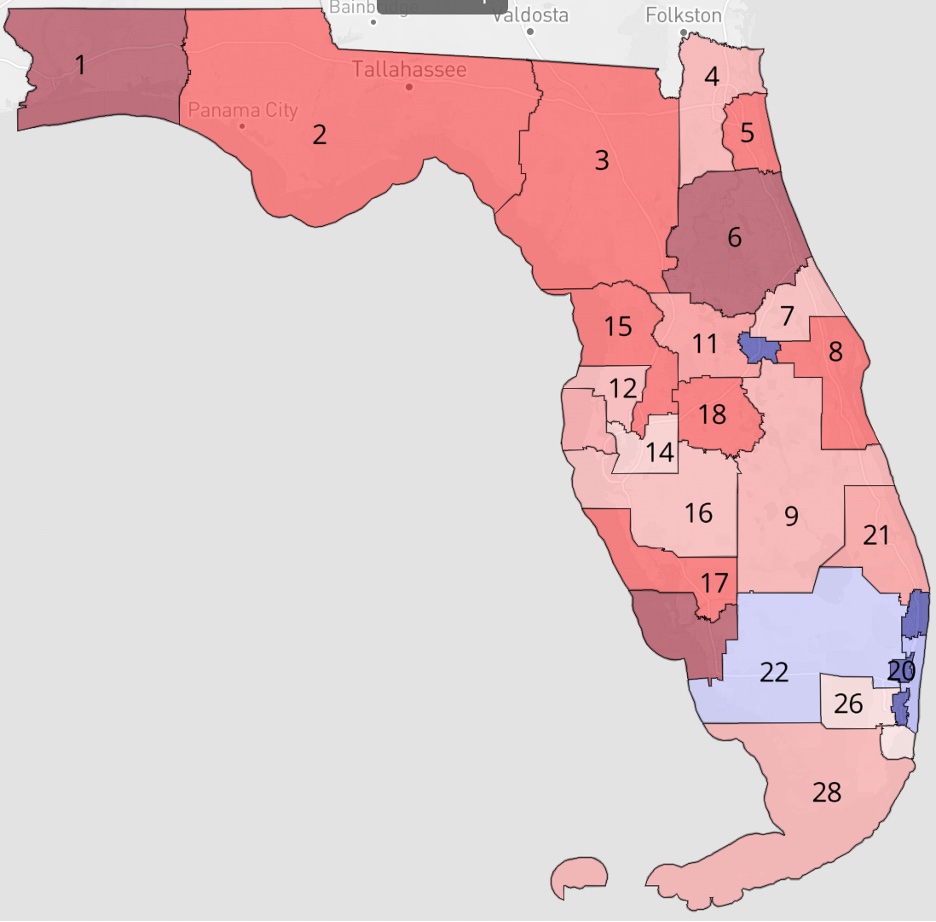
In the year of COVID, when Trump lost his first re-election bid but won Florida with just over 51.2% of the vote, DeSantis’ new map would have produced gains, but more modest ones. Under his map, six U.S. House seats have a Democratic lean based on the 2020 Presidential Election, with Democrats also taking Florida’s 22nd and 25th Congressional Districts. Democrats won just over 51% of the vote in the former and more than 52% in the latter. But Republicans still won every seat in Central Florida and Tampa Bay. But while the gains are smaller as compared to 2022 or 2024, Republicans would still likely have picked up seats, as Democrats won 11 seats that year.
2018
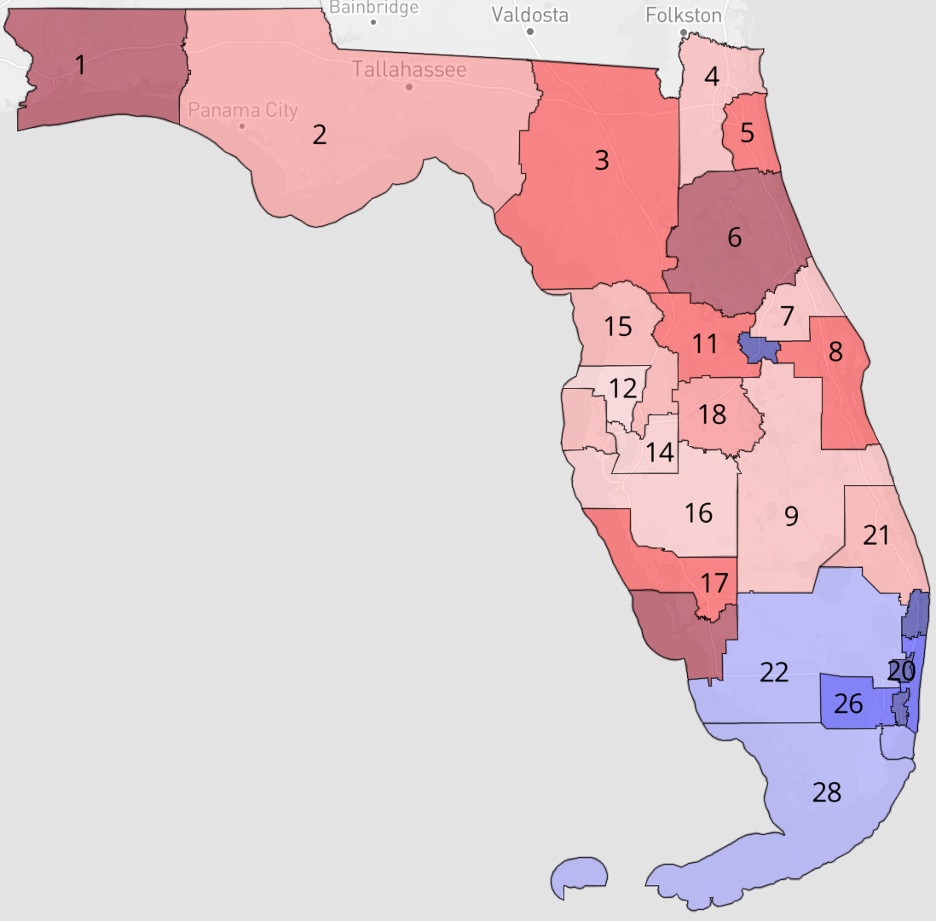
Democrats immediately pointed out that in 2018, the last Democratic wave environment during a Trump presidency, Democrats would gain seats over the current delegation. The Dave’s Redistricting analysis shows Democrats with an edge in nine seats under the proposed map. DeSantis that year won by a recount margin, as did now-U.S. Sen. Rick Scott as he unseated then-Democratic incumbent Bill Nelson. Transpose 2018 results on the proposed map and Democrats would win nine seats, including two seats that closely resemble ones represented now by GOP Representatives in South Florida. Under the map as it existed in 2018, Republicans won 14 seats to Democrats’ 13 (on a map with one fewer congressional seat than now).
2016
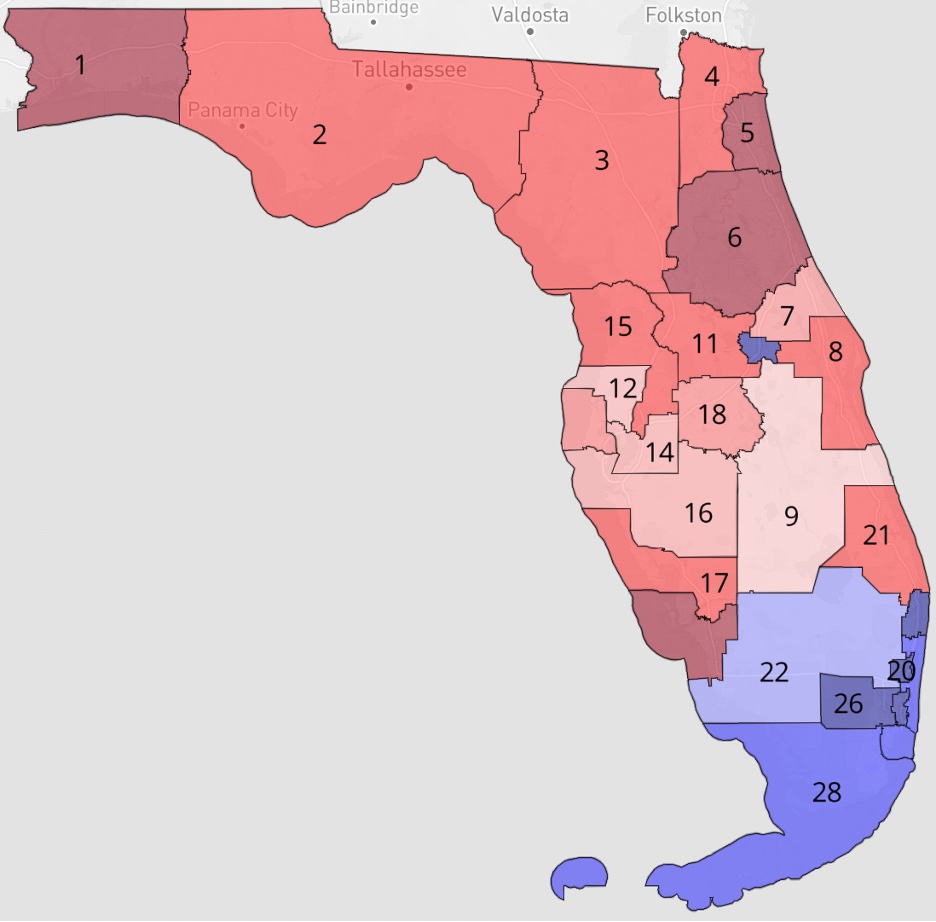
Trump’s surprise White House win in 2016 included taking Florida with 49% to Hillary Clinton’s 47.8%. Democrats would again win nine congressional seats under this congressional map, sweeping all of South Florida. By comparison, Democrats won 11 seats that year under a map just implemented that cycle by the Florida Supreme Court.
The post How would Ron DeSantis’ congressional map perform based on prior election cycles? appeared first on Florida Politics – Campaigns & Elections. Lobbying & Government..